Email:
Info@kinguardfire.comSales & Technical Support:
+852 6330 3016
Email:
Info@kinguardfire.comSales & Technical Support:
+852 6330 3016
Date:
2026/03/31
Fire-resistant glass skylights are widely used in commercial buildings, airports, and public infrastructure where both fire protection and natural lighting are required.
However, selecting fire-rated skylight glass is not only about meeting EI or EW classification. Long-term performance, structural stability, and environmental resistance are equally critical.
In real projects, the challenge is not passing a fire test. It is ensuring that the system maintains stability, clarity, and integrity over time.
A skylight operates under continuous exposure:
• Solar radiation
• Daily thermal expansion and contraction
• Structural movement
• Moisture and environmental stress
These factors introduce long-term degradation risks that are not reflected in standard fire resistance testing.
Fire resistance testing evaluates short-term extreme exposure conditions.
It does not replicate:
• Years of UV exposure
• Continuous thermal cycling
• Mechanical stress from structural movement
• Water ingress and sealing degradation
As a result, a skylight system that passes fire testing may still face performance issues during its service life.
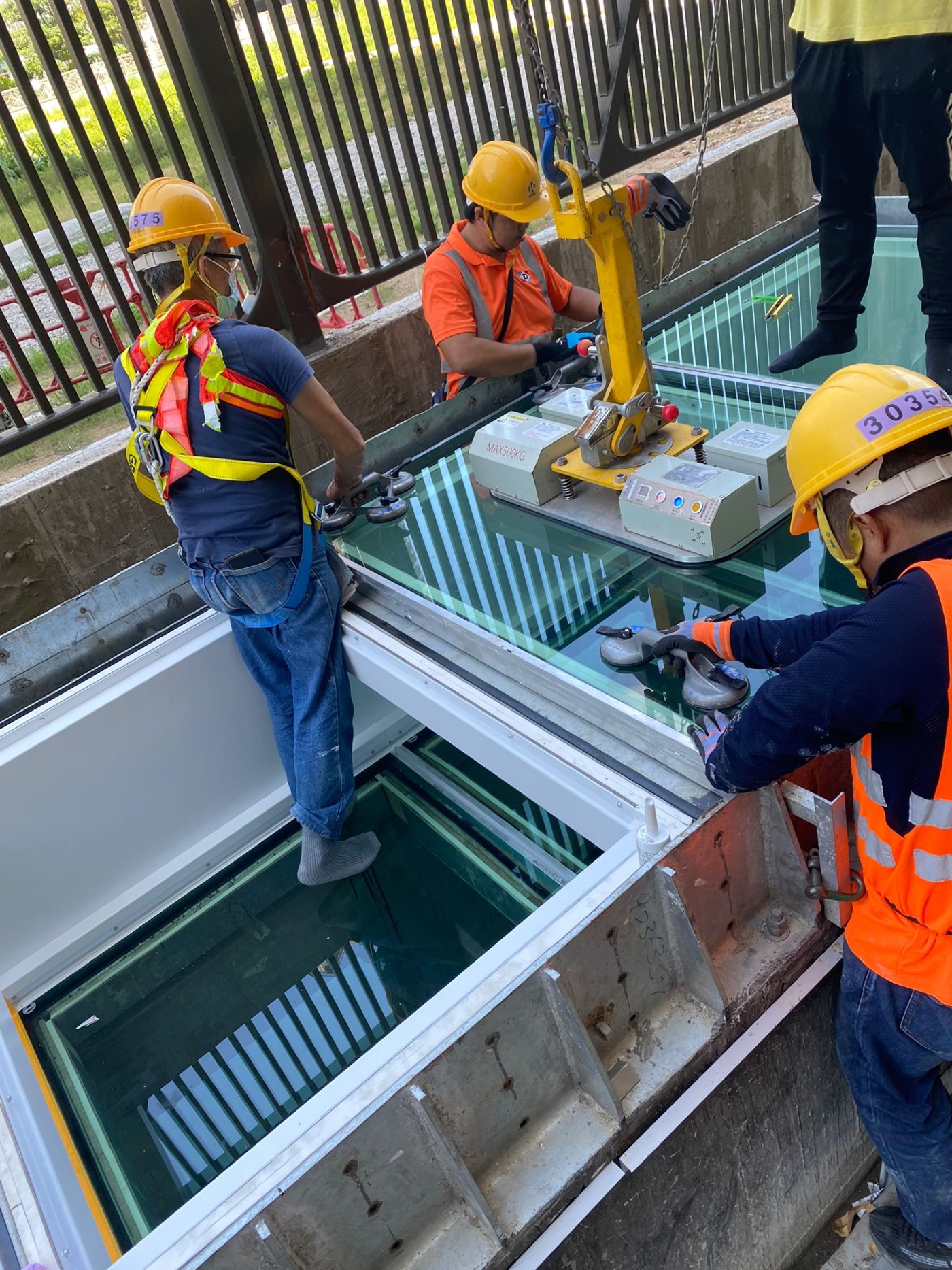 Four Key Design Principles for Fire-Resistant Skylights
The system must meet the required EI or EW classification, while maintaining edge integrity over time. Long-term stability at the edges is critical to overall performance.
Unlike vertical glazing, skylights are directly exposed to sunlight and heat accumulation. Materials must be engineered to maintain optical clarity and structural stability under long-term UV and thermal conditions.
Skylights are subject to thermal expansion, wind load, and structural movement. The system must accommodate these forces without transferring stress into the interlayer or compromising performance.
Effective design goes beyond sealing. A reliable skylight requires controlled drainage systems and multi-layer protection against water ingress.
In practical applications, fire-resistant skylight systems must be evaluated as integrated assemblies rather than individual glass components.
This includes:
• Fire-rated glass (EI / EW classification)
• Framing system compatibility
• Edge sealing performance
• Drainage and waterproofing design
A failure in any of these elements may compromise the entire skylight system.
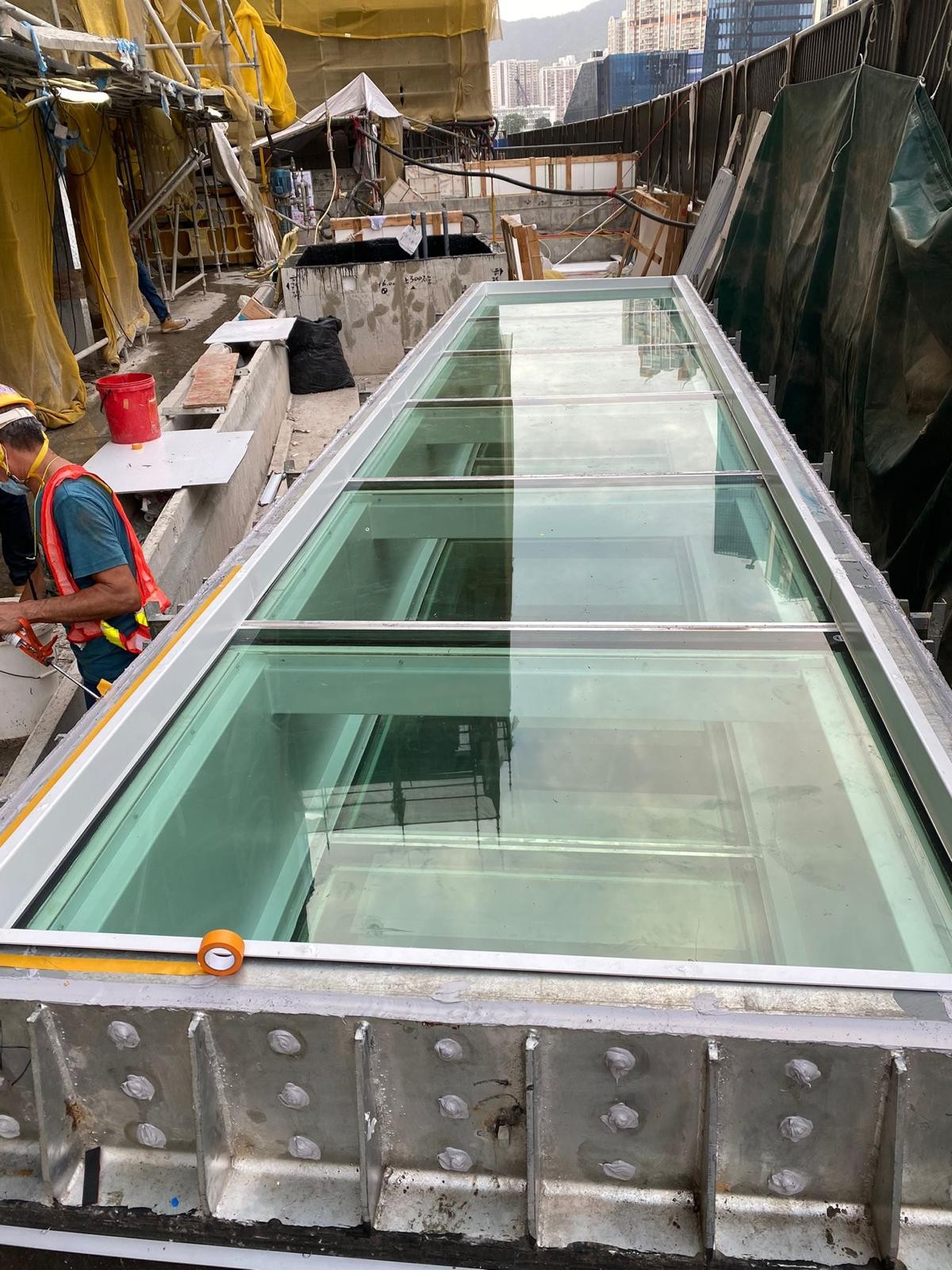
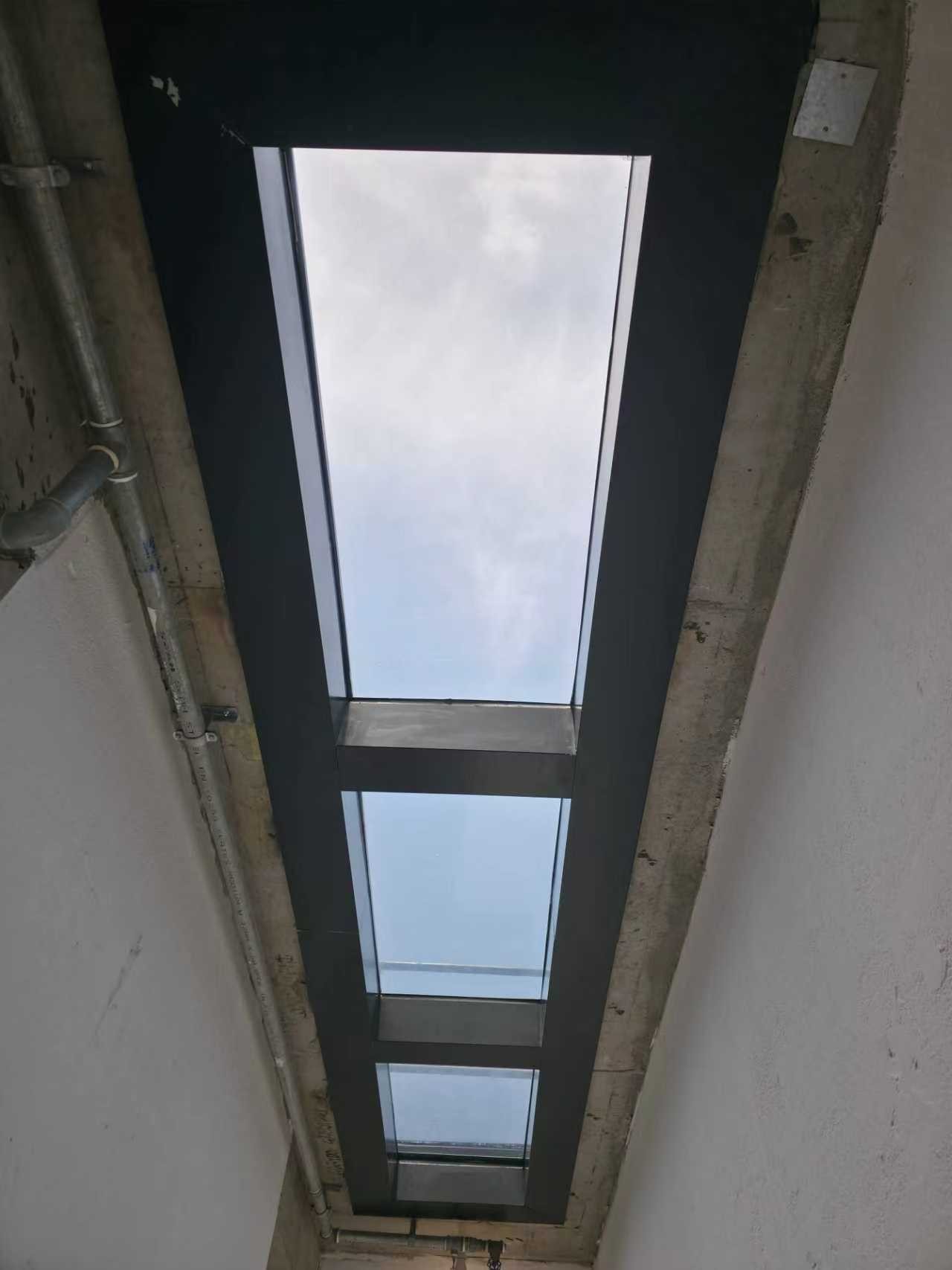
A fire-resistant skylight is not defined by the glass alone. It is defined by how the entire system is engineered.
Glass, framing, sealing, and environmental resistance must work together as one integrated solution.
Fire-resistant glass skylights should be designed for a 20+ year service life — not just to meet a test requirement.
The real value lies not only in fire protection, but in long-term reliability.
If you are working on fire-resistant skylight projects or specifying fire-rated glazing systems, selecting the right solution is critical for long-term performance.
For technical support, system recommendations, or project discussions, feel free to contact us.